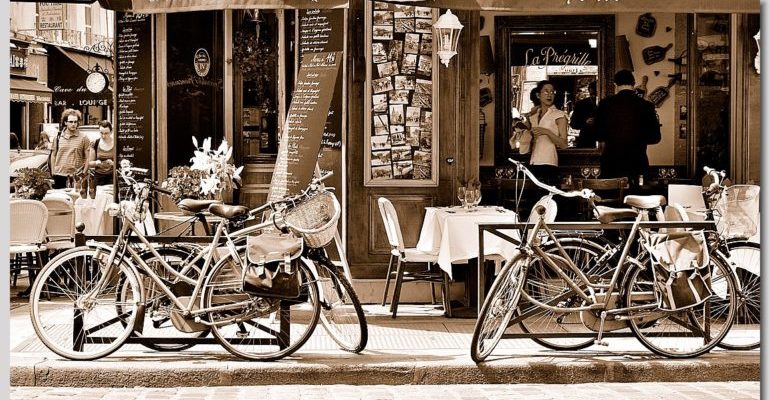
The Latin Quarter is a historic district of Paris, located on the left bank of the Seine. It completely occupies the fifth arrondissement of the French capital, as well as the northern part of the sixth arrondissement. This area of the city was least affected by the rebuilding undertaken by Baron Osman in the middle of the XIX century. The narrow winding streets of medieval Paris, old houses and churches have been preserved here.
Nowadays, the Latin Quarter is one of the nicest old neighborhoods in Paris, where you will find many restaurants and cafes, where you can wander through the old narrow streets, admiring the architectural sights, and if you have a good guide with you, you will learn many fascinating stories about the famous people who lived in this area.
The Latin Quarter, and especially Boulevard Saint-Germain, is still the favorite place of the intellectual Parisian elite. Famous painters, writers, and actors can be found in local restaurants.
Many connoisseurs say that it is here that the atmosphere of Paris is especially felt, it harmoniously combines: street noise and silence of narrow alleys, cozy cafes and the twilight of souvenir shops, where you can find unusual and interesting things.
A little history
Roman era
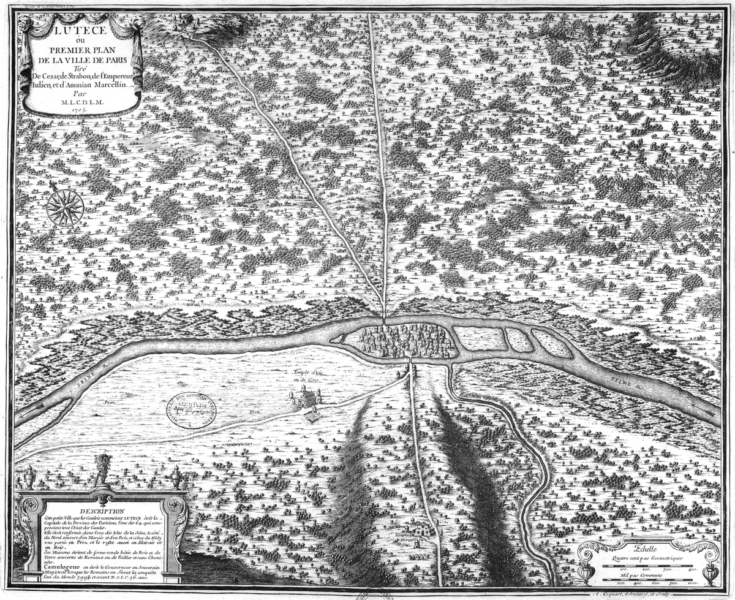
The settlement of Lutetia, where the Parisians lived, was located on the island of Cité. However, the Romans who captured it liked the left bank of the Seine better. Here, on the lands where the Latin Quarter is now located, they began to build residential neighborhoods and public buildings: the Forum, an arena for gladiatorial fights, a theater and, of course, thermae.
From the Middle Ages to the present day
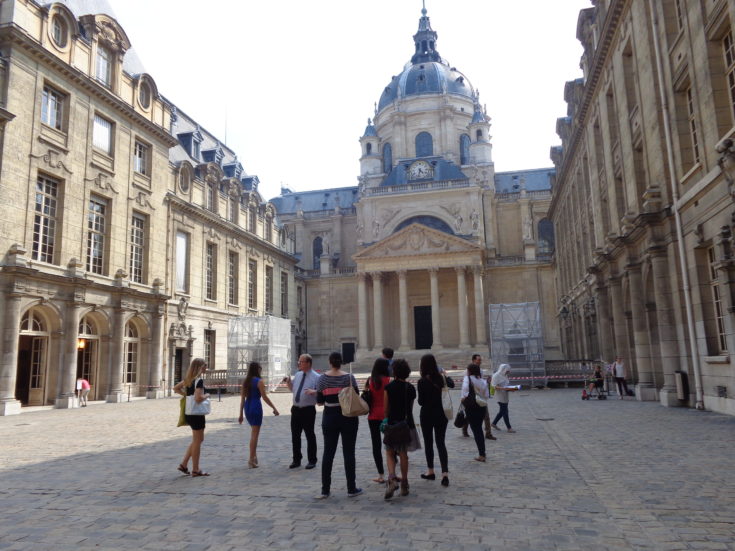
In the 12th century, this part of the city became popular with the clergy. Since priests were the most educated part of society in the medieval era, they began to organize schools and colleges. One of the first such institutions was the Sorbonne, founded in 1253. The educational institution was named after its founder, Robert de Sorbonne, the confessor of King Louis the Saint.
In addition to the Sorbonne, there were dozens of other schools in this district: the College of Arcourt (now Lycée Saint-Louis), the Scottish College, the College of Clermont, the College of Navarre, and others. Because these institutions had students from different countries, they taught in Latin, which was considered the international language of theology and science. It was at this time that the unofficial name “Latin Quarter” was adopted for this area of Paris, which became official after the French Revolution.
Nowadays, this part of the city is also filled with students. Four of the Sorbonne’s 13 universities hold classes in the historic building. In addition, the Latin Quarter is also home to other educational institutions such as the Polytechnic Institute, the prestigious university – École Normale, and the Lycée Henry IV.
The Latin Quarter of Paris is an interesting historical district on the left bank of the Seine, surrounding the legendary Sorbonne University. The neighborhood did not get its name at all because it was favored by natives of Latin America. It has always been home to students who spoke excellent Latin, a subject that for many years was a compulsory part of classical education.
Nowadays, the Latin Quarter is one of the nicest old neighborhoods in Paris, where you will find many restaurants and cafes, where you can wander through the old narrow streets, admiring the architectural sights, and if you have a good guide with you, you will learn many fascinating stories about the famous people who lived in this area.
The Latin Quarter, and especially Boulevard Saint-Germain, is still the favorite place of the intellectual Parisian elite. Famous painters, writers, and actors can be found in local restaurants.
Many connoisseurs say that it is here that the atmosphere of Paris is especially felt, it harmoniously combines: street noise and silence of narrow alleys, cozy cafes and the twilight of souvenir shops, where you can find unusual and interesting things.
Latin Quarter Attractions
This ancient part of the city is rich in monuments from different eras. Among them:
The arenas of Lutetia
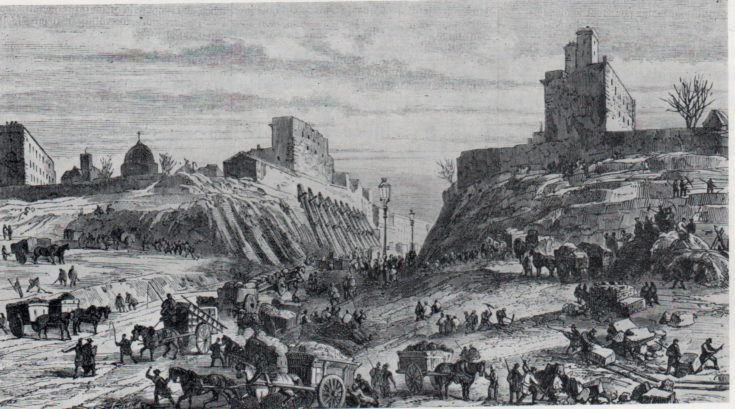
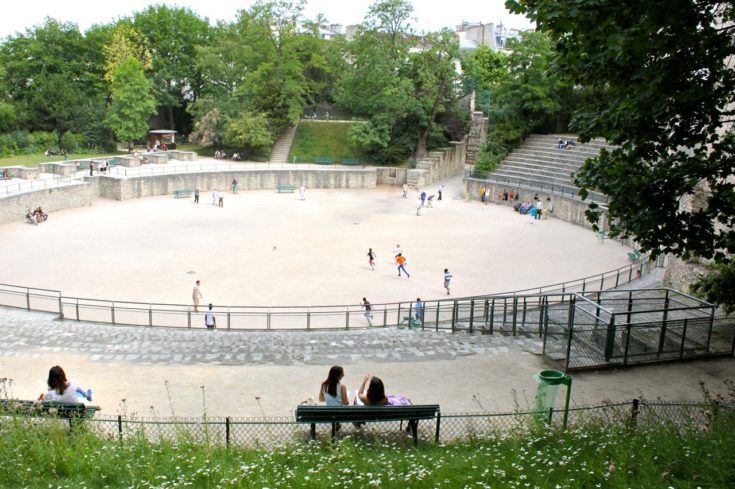
The 17,000-seat amphitheater was built in the 1st century AD and was used for theatrical performances and gladiatorial fights until the 3rd-4th centuries. The structure was accidentally found in 1869, and in 1883 it was declared a historical monument. Nowadays, there is a public garden where tourists and locals use the arena to play petanque or amateur soccer.
Museum of the Middle Ages-Thermes Cluny
In the heart of the Latin Quarter are the impressive ruins of ancient thermae, partly built into the Gothic building of the Abbey of Cluny, which now houses the Museum of the Middle Ages. A visit to the museum reveals a well-preserved Roman frigidarium, as well as an interesting exhibition, the jewel of which is the tapestry of the Lady with the Unicorn.
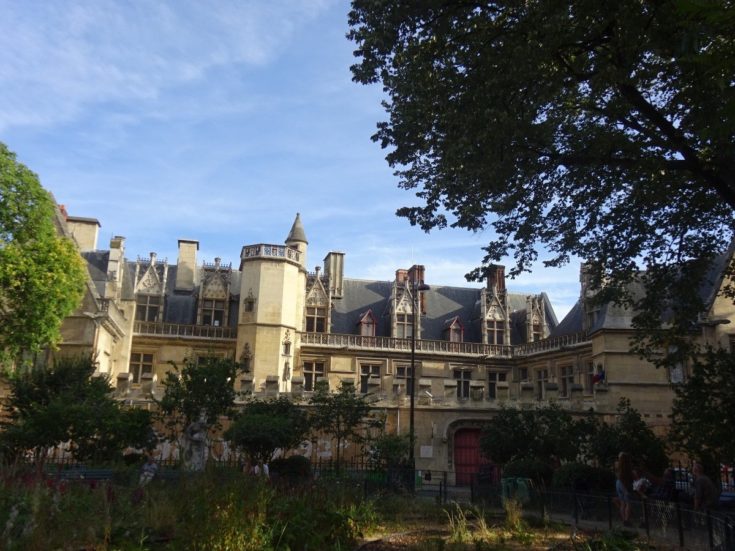
Sorbonne
Of particular interest in the university complex is the Chapel of St. Ursula, whose construction was commissioned and supervised by Cardinal Richelieu. A magnificent tombstone was made during his lifetime, under which the clergyman was buried.
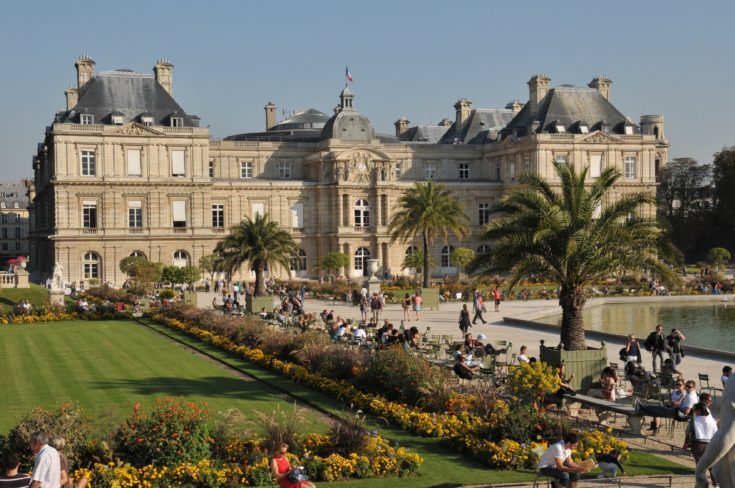
Luxembourg Gardens and Luxembourg Palace
One of the oldest and most beautiful parks in the French capital was laid out in the early 17th century at the request of Queen Maria de’ Medici, who longed for the gardens of her native Florence. The first Parisian fountain, which has survived to this day, was also built here. The park attracts attention with beautiful alleys and picturesque flower beds, but also with an abundance of statues, mostly dedicated to prominent people of France. In the central part of the park rises the elegant Luxembourg Palace, where the French Senate sits.
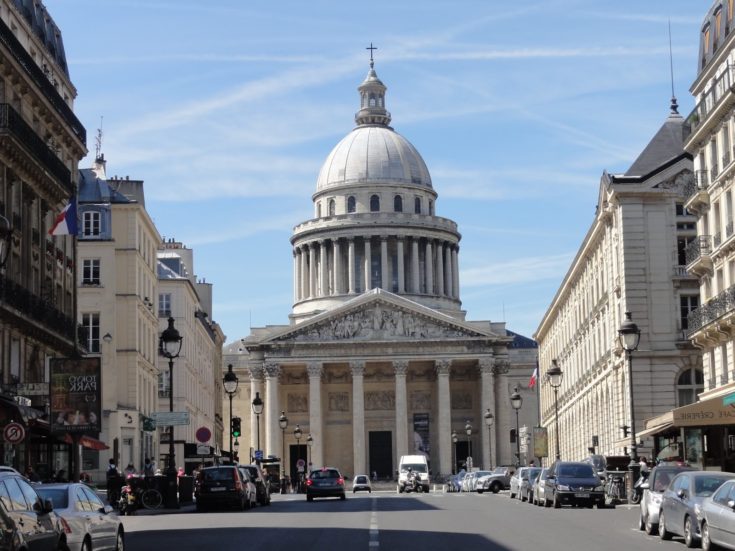
Pantheon
Not far from the Luxembourg Gardens stands the majestic Pantheon. Originally it housed the temple of St. Genevieve, the patron saint of Paris, but after the French Revolution the building was used as a burial place for prominent people. There are graves of philosophers Jean-Jacques Rousseau and Voltaire, writers Victor Hugo, Alexandre Dumas-father, Emile Zola, architect of the Pantheon Soufflot, scientists Pierre and Marie Curie, politicians Jean Jaurès and Louis Gambetta, and many others.
Noteworthy are such monuments of the Latin Quarter as the church of Saint-Julien-le-Pauvre, in the architecture of which are visible Romanesque and Gothic features, the church of Saint-Severin in the style of “flaming Gothic”, made in the spirit of the Renaissance Church of Saint-Etienne-du-Mont, rising on the hill of St. Genevieve.
This part of Paris is also home to the famous Botanical Gardens, which includes a menagerie, the National Museum of Natural History with the Evolution Gallery, the Institut du Monde Arabe, and many other attractions.
Interesting facts
- On the territory of the Latin Quarter in the square René Viviani grows the oldest tree in Paris – Robinia (pseudo-acacacia), planted in 1601 by the royal gardener Jean Robin.
- In the Latin Quarter is the narrowest street of the French capital, which is only 180 centimeters wide. Preserved since the XIII century, the street bears the unusual name of the Cat Fisherman (Rue du chat qui peche). As historians believe, it came from a signboard with a similar plot, but there is a legend about a cat that caught fish in the Seine and fed it to its elderly master.
- The oldest street in this part of Paris is Rue de Mouffetard, which was laid out by the ancient Romans. Nowadays, there is a popular food market, as well as a large number of bistros and restaurants.
- The youngest street in the Latin Quarter is Boulevard Saint-Michel (students like to shorten its name to Boule-Miche). It appeared in the era of Osman’s reforms in 1869.
- Almost all the heroes of the famous novel “The Three Musketeers” by A. Dumas-father lived in the Latin Quarter. D’Artagnan rented an attic from the haberdasher Bonacieux on the Rue des Gravediggers; Porthos’s house was located on the Rue des Old Pigeons, Aramis lived on the street with the original name Cherche-Midi (“Look for noon”), and the noble Athos – on the Rue Feroux, leading to the church of Saint-Sulpice.
We invite you to sightseeing tour of Paris During which you will be able to familiarize yourself with many other sights of the capital in the company of a Russian-speaking guide.
YOU MIGHT BE INTERESTED IN THIS:
- Transferts in Paris
- Private Paris City Tour
- Private Tour to Champagne
- Private Tour to Normandy
- Private Tour Loire Vallley Castles
- Private Tour Mont St Michel
- Private Tour to Bruges

